Dog Body Language Chart: 15 Signals Decoded
Dogs rarely communicate with one signal at a time. A wagging tail, pinned ears, whale eye, or play bow only makes sense when you read it with the whole body and the situation. This dog body language chart gives you a practical way to sort everyday signals into relaxed, playful, stressed, and warning patterns.
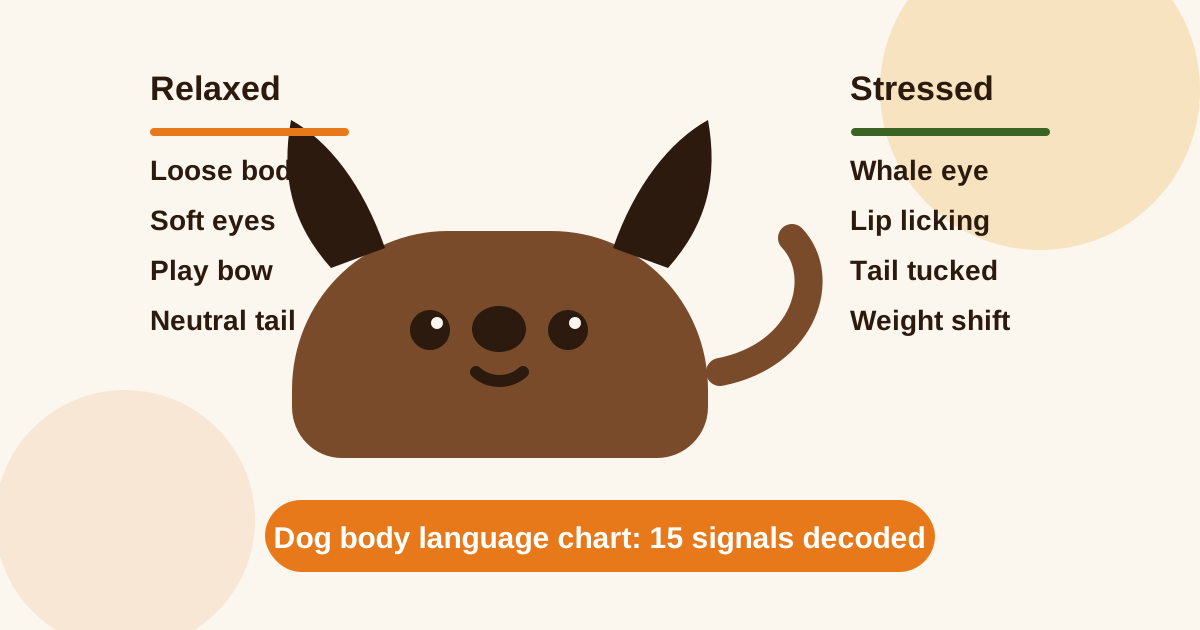
| # | Signal | Likely group | What to look for |
|---|---|---|---|
| 1 | Loose body | Relaxed | Soft muscles, easy movement, curved spine |
| 2 | Soft eyes | Relaxed | Blinking, almond shape, no hard stare |
| 3 | Neutral ears | Relaxed | Resting naturally for that breed |
| 4 | Mid-height tail | Relaxed | Loose wag with a wiggly body |
| 5 | Play bow | Playful | Chest low, rear up, bouncy reset |
| 6 | Bouncy movement | Playful | Curved approaches, pauses, role switching |
| 7 | Open mouth | Comfortable | Loose jaw, normal breathing, soft cheeks |
| 8 | Yawning/lip licking | Stressed | Appeasement or tension when out of context |
| 9 | Whale eye | Stressed | White crescent showing while watching a trigger |
| 10 | Tucked tail | Stressed | Tail low or under body, often with crouching |
| 11 | Pinned ears | Stressed | Ears flattened back with avoidance cues |
| 12 | Weight shift | Stressed | Leaning away, turning side-on, preparing to leave |
| 13 | Freeze | Warning | Body suddenly still, closed mouth, hard focus |
| 14 | Piloerection | Aroused | Raised hackles; excitement, fear, or conflict |
| 15 | High stiff tail | Warning | Rigid tail, tight wag, still posture, hard eyes |
Before you use any dog body language chart, remember the golden rule: read clusters, not single body parts. A raised tail on one dog may be normal carriage; on another dog it may be intense arousal. A yawn can mean tiredness after a nap, but a yawn during a hug, vet exam, crowded sidewalk, or child interaction may be a request for more space. Context turns a signal into useful information.
This guide is designed for everyday observation, not diagnosis. If a dog repeatedly freezes, growls, snaps, guards resources, or seems unable to recover after stress, pause the situation and get help from a qualified positive-reinforcement trainer or veterinary behavior professional. Good body-language reading should make dogs safer and less pressured, not encourage people to push past warnings.
Relaxed dog body language signals
A relaxed dog looks easy in their skin. The body is loose rather than braced, movement is curved rather than direct, and the dog can disengage from whatever is happening. Soft eyes are one of the best signs: the eyelids look natural, blinking is normal, and there is no fixed stare. Ears rest in their breed-normal position instead of pinning flat or straining forward.
Tail position matters, but the whole dog matters more. A neutral or mid-height tail with a loose sweep often pairs with a wiggly body, soft mouth, and relaxed breathing. That cluster usually says, “I’m comfortable.” A loose open mouth can also be a good sign when the jaw is relaxed and the dog is breathing normally. If the mouth suddenly closes, the body stiffens, or the dog stops moving, the emotional picture has changed.
Ear position also depends on breed and anatomy. A prick-eared dog, a floppy-eared dog, and a cropped-eared dog will not show the exact same silhouette, so compare your dog to their own normal baseline. Relaxed ears usually move naturally toward sounds and then settle again. The same baseline rule applies to tails: a curled tail, low-carried tail, or naturally high tail can all be normal for different dogs. What you are watching for is the change from loose and flexible to tight, tucked, or unusually high and still.
Playful and social signals
The play bow is the classic friendly signal: front end down, rear up, and movement that looks springy rather than frozen. Dogs use play bows to invite play and to tell another dog, “What comes next is a game.” Healthy play also includes pauses, role switches, curved approaches, and self-handicapping, such as a bigger dog making their movements softer for a smaller one.
Bouncy movement is another green-light cue. A playful dog may dart away, circle back, shake off, or exaggerate movements. The key is that both dogs can opt in and opt out. If one dog keeps hiding, freezing, tucking their tail, or trying to leave while the other dog keeps pursuing, it is no longer balanced play. Pause the interaction and give both dogs room to reset.
Stressed or conflicted signals
Stress signals are often subtle because many dogs try to avoid conflict before they escalate. Yawning and lip licking are common examples. They do not always mean stress, but when they appear during pressure, handling, greetings, training confusion, or close contact, treat them as a polite request to slow down. Looking away, turning the head, sniffing the ground, or leaning away can mean the same thing: “I need a little distance.”
Whale eye is a stronger warning that a dog feels trapped or worried. You see the white crescent of the eye because the head is turned away while the gaze stays on the trigger. Pinned ears, a tucked tail, crouching, and weight shifted backward often travel with this signal. If you see that cluster, do not test the dog or move closer. Create space, remove the trigger, and let the dog choose whether to re-engage.
Many bites happen after earlier signals were missed. A dog may first blink, lick their lips, turn their head, shift weight away, or move behind a person. If the pressure continues, those polite signals can become whale eye, freezing, growling, snapping, or biting. That is why the safest response is early and boring: stop the interaction, soften your body, avoid direct staring, and give the dog a clear exit. When a dog learns that quiet signals work, they have less reason to escalate.
High arousal and warning signals
High arousal is not always aggression. It can be excitement, fear, frustration, or conflict. Piloerection, often called raised hackles, is a good example: hair rises along the shoulders, back, or tail base because the nervous system is activated. Do not label it as “bad,” but do lower the intensity of the situation and watch the rest of the body.
A freeze is more urgent. If a dog suddenly goes still, closes the mouth, lifts a high stiff tail, and gives a hard stare, they are no longer just processing. They may be deciding what to do next. A tight fast tail wag in that posture is not a happy wag; it is tension. Stop reaching, stop leaning over the dog, and increase distance calmly. If these signals happen often, work with a qualified positive reinforcement trainer or veterinary behavior professional. Never punish a growl or warning signal; it is valuable information that the dog needs more space, a slower setup, or a different plan.
How to use this chart in real life
Start by naming the group, not the emotion. Ask: does my dog look loose, playful, conflicted, or intensely aroused? Then ask what just changed. A guest entered, a child hugged, another dog stared, the leash tightened, or a toy appeared. Finally, respond in the safest direction: give space for stress, pause for conflict, redirect for arousal, and reward calm check-ins. Your goal is not to memorize every signal perfectly; it is to notice earlier and help your dog feel understood.