Why Does My Dog Tilt Its Head? 7 Common Reasons and What to Do
A dog head tilt is one of the internet’s favorite behaviors, but it is not just cute. Dogs may tilt to locate a sound, focus on a familiar word, see your face more clearly, invite attention, or respond to discomfort. The key is whether the tilt is brief and situational or sudden, repeated, and hard to interrupt.
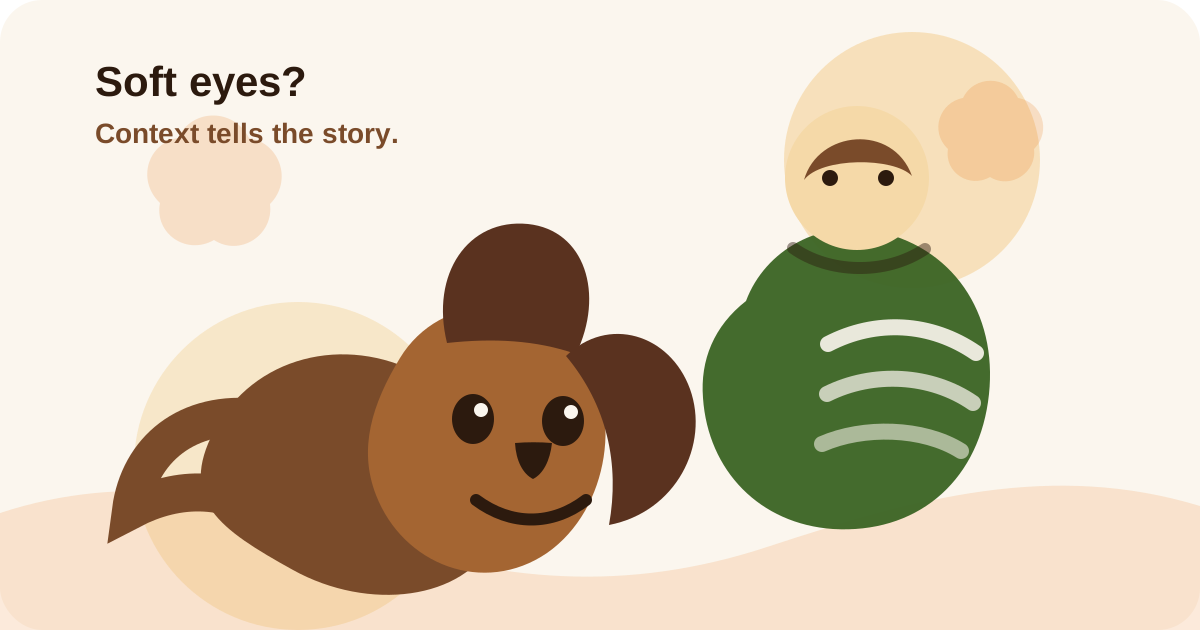
First, notice what triggered the tilt
A normal head tilt usually has a trigger: a squeaky toy, a strange phone noise, a familiar phrase, your high-pitched voice, or a word your dog associates with something meaningful. It lasts a moment, the body stays loose, and your dog quickly returns to normal.
A concerning tilt is different. It may appear suddenly without a sound, stay fixed, always lean to the same side, or come with head shaking, scratching, stumbling, nausea, odd eye movements, or pain. Cute context and medical context can look similar at first glance, so read the whole picture.
1. Your dog is locating a sound
Dogs are built to notice sound. A tilt may help your dog orient toward a noise and gather more information: Where did that come from? Is it familiar? Should I care? You may see this when a toy squeaks, a package lands outside, a phone speaker crackles, or a new voice comes through a video call.
This tilt usually looks bright and alert rather than worried. The ears may move, the body stays balanced, and the behavior fades once the sound is understood. If your dog follows the tilt with a stare, compare it with our guide to why dogs stare at people.
2. Your dog recognizes an important word
Some dogs tilt when they hear words that predict an outcome: walk, dinner, outside, car, ball, bed, or a family member’s name. The tilt can be part of active listening. Your dog is trying to match your sound, expression, and body movement with what usually happens next.
If you want clearer communication, pair words with consistent actions. Say “walk” only when a walk is actually coming. Use “all done” when the game ends. Dogs learn faster when our language is predictable instead of constantly changing.
3. Your dog may be trying to see your face better
Dogs read human faces, hands, shoulders, and routines. Depending on muzzle shape, a small head tilt may change the angle enough to help your dog see your mouth or expression. That does not mean every tilt is about vision, but it fits the bigger theme: dogs are constantly combining sound, sight, scent, and context.
You can help by making cues easier to read. Keep verbal cues short, pair them with clear hand signals, and avoid repeating the same word ten times in different tones. The cleaner the signal, the less your dog has to guess.
4. The tilt may be reinforced because humans love it
If your dog tilts and everyone laughs, coos, films, gives treats, or says “That is so cute,” the behavior may become a social trick. There is nothing wrong with that when the dog is relaxed. It simply means your dog has learned that a head tilt gets warm attention.
Keep it kind. Do not blast strange noises or tease your dog just to get a video. If the sound makes your dog tense, lick lips, yawn, turn away, or leave, stop. For more on those softer stress signals, read our guide to dog licking.
5. Ear discomfort can make a tilt one-sided
Head tilting is not always a communication signal. Ear infections, irritation, wax buildup, grass awns, allergies, mites, or pain can make a dog hold the head oddly. Watch for scratching at one ear, head shaking, odor, discharge, redness, swelling, crying when touched, or rubbing the side of the face on furniture.
Do not put home remedies in your dog’s ear without veterinary guidance. Ear problems can involve the canal, eardrum, skin, allergies, or deeper infection. A vet exam is the safest way to protect hearing and comfort.
6. Balance or neurologic problems need quick attention
A sudden persistent head tilt paired with stumbling, falling, circling, vomiting, rapid eye flicking, severe disorientation, collapse, or inability to stand is not a training issue. It can point to vestibular disease, ear disease, toxin exposure, trauma, or another neurologic problem. Your dog needs a veterinarian promptly.
If your dog is a senior and the tilt appears with confusion, nighttime pacing, staring at walls, or getting stuck in corners, mention those details too. Patterns matter, and your vet can separate ear, balance, pain, and cognitive causes.
Quick guide: what kind of head tilt is it?
| Head tilt type | Other clues | Likely meaning |
|---|---|---|
| Curious tilt | Soft eyes, loose body, triggered by a sound or familiar phrase | Listening, orienting, or expecting interaction |
| Learned cute tilt | Appears after praise, laughter, camera, treats, or attention | A reinforced behavior your dog knows humans love |
| One-sided ear tilt | Head shaking, scratching, odor, redness, pain, debris | Possible ear irritation or infection |
| Sudden persistent tilt | Loss of balance, eye flicking, circling, vomiting, collapse | Urgent vestibular or neurologic concern |
What should you do when your dog tilts their head?
If the tilt is brief, triggered by a sound or word, and your dog looks loose and happy, enjoy the moment. You can reward calm attention, use the chance to practice a cue, or simply smile back. If the tilt is repeated, fixed, one-sided, painful, or paired with balance changes, call your veterinarian instead of waiting to see whether it passes.
The most useful question is not “Is a head tilt cute?” It is “What else is my dog’s body telling me?” A head tilt with relaxed eyes is curiosity. A head tilt with pinned ears, licking, yawning, and retreating is stress. A head tilt with imbalance is medical.